


How many times have you heard about a great project idea that never saw the light of day? Or a promising brand that stopped after just a few months? Most of the time, the problem isn’t the idea itself, but the absence of a clear business model.
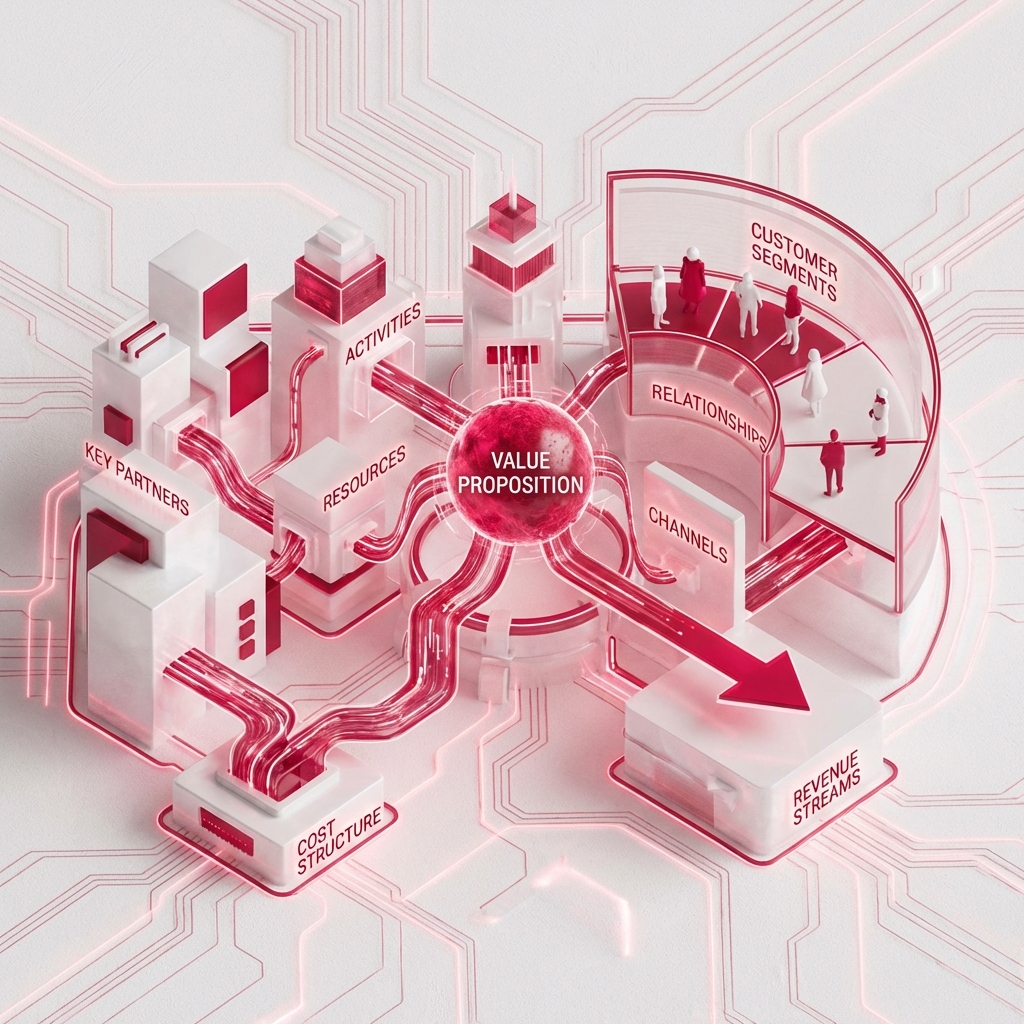
A business model is the map that defines how your project works, how it creates value, and how it generates profit. It’s the difference between a beautiful idea and a sustainable project.
In this article, we’ll guide you step by step to build a solid and thoughtful business model.
Steps :
Step 1: Define the problem you solve
Every successful project starts with a simple question: What problem do I solve?
Don’t start with the product or service start with the pain your audience experiences. Understand their real needs, daily challenges, and what they’re looking for but can’t find in the market.
Practical example: If you want to launch a logo design service, the problem isn’t “people need logos” it’s “startup founders can’t find designers who understand their vision and offer strategic work, not just a pretty drawing”.
Tip: Talk directly with your target audience. Ask questions, listen to them, and understand what truly concerns them.
Step 2: Know your target audience precisely
“Everyone” is not a target audience. The more precise you are in defining who you serve, the greater your chances of success.
Define:
- Who are they? (age, location, profession, interests)
- What are their challenges?
- Where are they? (social media, workplaces, events)
- How do they make purchase decisions? (price, quality, speed, trust)
Example: Instead of “business owners”, define: “Moroccan entrepreneurs aged 25-40, launching their first project in digital services, looking for professional visual identity with a moderate budget”.
Step 3: Create a distinctive value proposition
The value proposition is the answer to: “Why should the customer choose me over others?”
It’s not enough to offer a good product or service you must offer something different and distinctive.
Ask yourself:
- What do I offer that competitors don’t?
- What’s the real benefit the customer gets?
- What makes me unforgettable?
Example from Nanogram: The value proposition isn’t “we design beautiful logos” it’s “we build strategic visual identities that think, breathe, and express designed to last”.
Step 4: Define how you’ll generate revenue
Now comes the important question: How will the project make money?
Common options:
- Product sales (one product, one price)
- Service delivery (custom projects, billable hours, packages)
- Monthly subscriptions (recurring revenue model)
- Commissions (percentage of sales)
- Licensing (selling usage rights)
Tip: Don’t rely on a single revenue source. Think about diversification for example: design services + selling ready-made templates + training workshops.
Step 5: Map your costs and resources
For your business model to be realistic, you need to know how much you’ll spend and what resources you need.
Define:
- Fixed costs: (rent, salaries, monthly subscriptions)
- Variable costs: (production cost, advertising, shipping)
- Essential resources: (team, tools, technologies, partnerships)
Example: If you offer a design service, your costs might include: software subscriptions (Adobe Creative Cloud), website, digital ads, and perhaps an assistant or another designer when demand increases.
Conclusion :
Building a business model isn’t just a document written and forgotten it’s a strategic foundation that guides all your decisions and determines your growth trajectory.
Start today:
- Define the problem you solve
- Know your audience precisely
- Create a distinctive value proposition
- Define how you’ll generate revenue
- Map your costs and resources
And remember What is built with depth, lasts with stability.
Work with a true expert
- 60-minute intensive brand analysis
- Space to share your complete vision
- Clear, authentic strategic direction
- Step-by-step roadmap to build a brand BUILT TO LAST